Research
The main technological objective of DAMOCLES is to develop a prototype for an Arctic Ocean Observing System (AOOS) including major innovations and breakthrough in High Technology instrumentation adapted to a remote and harsh environment such as the Arctic Ocean.
Topics:
The ACCESS (Arctic Climate Change Economy and Society) european project
The ACCESS (Arctic Climate Change Economy and Society) european project has begun on March 1st, 2011 (Sep 19, 2010)
End of the DAMOCLES Project
The DAMOCLES Project has ended on May 31st, 2010.
The DAMOCLES Publishable Final Activity Report can be downloaded (see end of page).
The DAMOCLES Website will no longer be updated.
If you are interested in the Arctic and Climate Change, a new European project has just begun on March 1st, 2011: ACCESS (Arctic Climate Change Economy and Society)
The ACCESS website is www.access-eu.org (Sep 18, 2010)
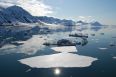
Arctic sea ice reaches annual minimum extent
After appearing to reach its annual minimum extent on September 10, and beginning to freeze up, Arctic sea ice again declined for several days. Ice extent reached its lowest value for the season on September 19, 2010, and has now been expanding for seven days. (Sep 27, 2010)

Arctic sea ice does not recover
Recently published data from DAMOCLES scientists reveal that another critical minimum for Arctic sea ice can be expected in September 2010. (Jun 24, 2010)
Polar science - global impact
The IPY Oslo Science Conference will demonstrate, strengthen, and extend the International Polar Year's accomplishments in science and outreach. The international and interdisciplinary science conference will in particular highlight the global impact of the changes that have been observed in the polar regions. (Jan 22, 2010)
From the press
- Slow ice growth leads to low November ice extent >>
[National Snow and Ice Data Center (NSIDC), Dec 6, 2010] - Arctic ice extent remains low despite rapid growth >>
[National Snow and Ice Data Center (NSIDC), Nov 2, 2010] - Weather and feedbacks lead to third-lowest extent >>
[National Snow and Ice Data Center (NSIDC), Oct 4, 2010] - End of summer approaches for Arctic sea ice >>
[National Snow and Ice Data Center (NSIDC), Sep 7, 2010] - Canada picks site for Arctic research station >>
[Nature, Aug 25, 2010] - North by Northwest >>
[National Snow and Ice Data Center (NSIDC), Aug 17, 2010] - Giant Greenland iceberg a climate 'warning sign' >>
[AFP, Aug 13, 2010] - Ice island could threaten oil, shipping >>
[Detroit News/Reuters, Aug 12, 2010] - July sea ice second lowest: oldest ice begins to melt >>
[National Snow and Ice Data Center (NSIDC), Aug 4, 2010] - A change in atmospheric circulation >>
[National Snow and Ice Data Center (NSIDC), Jul 20, 2010]

DAMOCLES is a european contribution to the International Polar Year 2007 - 2008.

DAMOCLES is financed by the European Union in the 6th Framework Programme.

